Carolyn Polhemus and Larren Lyttle Bribery Scandal
Presumed InnocentThe bribery scandal involving Carolyn Polhemus and Larren Lyttle is disclosed not as a cleanly documented case, but through competing accounts of an old arrangement whose private, professional, and political strands overlap. Leon Wells identifies Lyttle as the judge who took money arranged by Carolyn; Raymond Horgan later describes a less deliberate beginning and explains how Carolyn’s old file passed through his hands. The uncertainty matters: the episode exposes a corrupt exchange, but also a system in which personal loyalty and controlled disclosure make the full extent of wrongdoing difficult to establish.
Background and Political Context
The dealings reach back roughly eight or nine years before Leon Wells recounts them to Rusty Sabich and Dan Lipranzer. At the time, Carolyn was a probation officer who could speak to a judge on behalf of people on bond. Raymond’s later account places the first payment in a small, apparently casual incident: a man Carolyn had helped gave her a hundred dollars, and she brought the money to Lyttle to ask what to do with it. Raymond says that Lyttle found the situation amusing; the two spent the money on dinner, and their intimacy followed. In his version, what began as an improvised indulgence developed into an affair rather than a planned scheme.
The arrangement nevertheless took place within a political world structured by long-standing personal alliances. Lyttle remained an active presence in Raymond’s campaigns even though the Code of Judicial Conduct barred him from taking an official campaign role. He belonged to Raymond’s inner circle, alongside Mike Duke and Joe Reilly, and the intimacy of that circle helped determine who could exert influence around the prosecuting attorney. During a difficult campaign, Duke oversaw financing while Raymond met prospective donors; Raymond could leave the gathering, allowing Duke to press for contributions in his absence. The distinction between official roles and private access was therefore already strained. The scandal’s force comes partly from revealing how easily professional authority, political friendship, and private dealings could share the same network.
Leon Wells’s Account
The bribery is brought into the open when Lipranzer asks Leon about a payment of $1,500 to a deputy prosecuting attorney, made years earlier to make Leon’s problems go away. Leon initially resists answering. He challenges the police intrusion and refuses to present himself as someone who would willingly discuss the matter with an officer. Only after Lipranzer persists does he acknowledge that he paid the money.
Rusty then asks whether Carolyn was involved. Leon says she arranged the whole transaction. According to him, she told Leon that he need not worry because she knew how to take care of things; she instructed him where to go and how to bring the money. He describes her as controlled and practiced, and claims that she had done this many times. That assertion is Leon’s characterization, not an independently established count of other payments, but it sharply conflicts with Raymond’s account of a single, almost joking first episode.
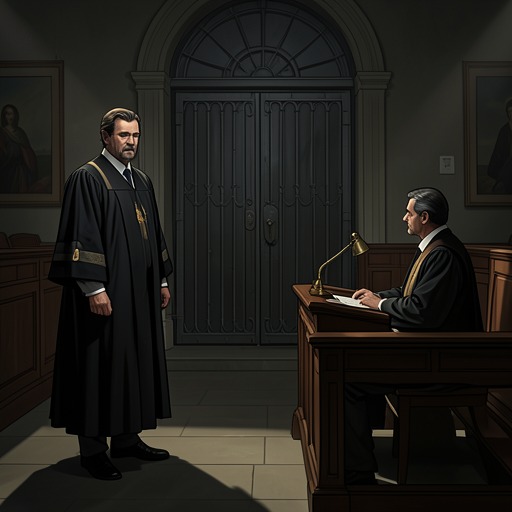
Leon recalls that Carolyn was present when he delivered the money. She told him not to turn around and to do what the man behind him said. The recipient instructed Leon to leave the money in the top drawer of a desk. Rusty checks the dismissal order and recognizes Lyttle’s distinctive signature, which he has seen repeatedly during the preceding two months. When Rusty names the judge, Leon confirms that the man was Black and says he recognized the voice from court. The dismissal order and Leon’s identification thus connect the hidden payment to a judicial act and to a specific recipient; the evidence does not rest solely on Leon’s general allegation that Carolyn had arranged it.
Conflicting Explanations and the File
When Rusty later asks Raymond how the arrangement began, Raymond says he does not know exactly what happened and recalls discussing it with Lyttle only once. He portrays Carolyn as a probation officer who sometimes spoke up for people on bond and Lyttle as willing to help her. In this telling, the first hundred-dollar payment was a gratuity from someone she had assisted; she took it to Lyttle, the two treated it as a joke, and they spent it on dinner. Raymond says the affair followed. His account supplies a possible origin for the relationship and the corrupt conduct, but it does not directly explain Leon’s larger payment, Carolyn’s alleged instructions, or Lyttle’s use of a desk drawer to receive the money.
Raymond also describes the decisions that followed. He says Lyttle urged him to hire Carolyn, presenting her as financially strained by law-school tuition and a low-paid probation job. Raymond agreed to double her salary and initially expected her to remain in a deputy assignment, where two other deputies could watch her. Instead, he says, she proved highly capable. He later transferred Lyttle downtown, and claims the two had become so respectable that they barely spoke in the final five or six years before Carolyn’s murder. Raymond acknowledges that he was seeing Carolyn by the time an anonymous letter arrived, but denies giving her a file in order to destroy or conceal it. He says he handed it to her without knowing what it contained and warned her that someone might look over her shoulder.
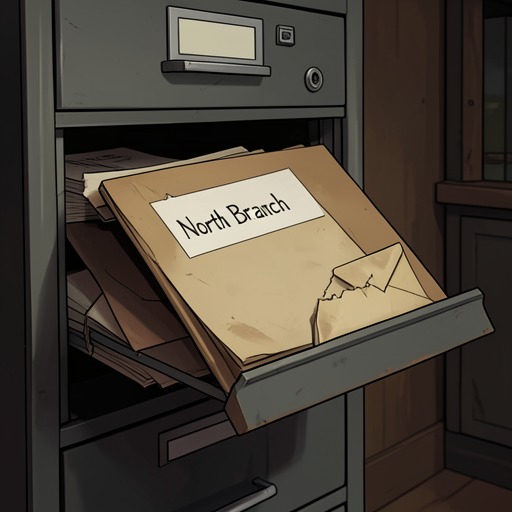
Rusty reads that transfer differently. He believes Raymond was too careful to let a politically sensitive matter lead back to him, and interprets the instruction to investigate as an unspoken direction to manage any trouble involving Lyttle and Carolyn. The old arrest file from the 32nd District police station becomes central to this suspicion: Carolyn had it, and Raymond’s account does not satisfy Rusty about how it reached her or what she was expected to do with it.
Disclosure and Significance
After Carolyn’s body is found, Raymond says, Lyttle telephoned him and asked him to collect the file because it might be politically sensitive. Raymond insists that he had already told Lyttle about the anonymous letter and that he gave the file to Rusty when asked. Rusty answers that Raymond had no choice by then and accuses him of having tried to mislead him. Raymond’s admission that Lyttle asked him to retrieve the file places the judge within the effort to control the handling of a document connected to the old case, even as Raymond denies knowing its contents beforehand.
The scandal therefore widens beyond the original exchange of money. Leon’s account identifies Carolyn as the organizer and Lyttle as the judge who received the payment; Raymond’s account recasts the beginnings as a casual episode that became an affair and emphasizes Carolyn’s subsequent professional ability. Their versions differ in scale and emphasis, and Raymond’s intimate connection to both people complicates his position as an explainer. Rusty’s inquiry, meanwhile, turns on the file’s movement as much as on the bribe itself. The episode shows how a judicial favor could be entangled with money and sex, then sheltered by friendship, discretion, and political caution. Its unresolved edges are part of its significance: the evidence reveals a concrete corrupt transaction, but the people who might explain the larger pattern are also bound to the network that kept it obscure.